Digital twins in the classroom: why we teach simulation before hardware
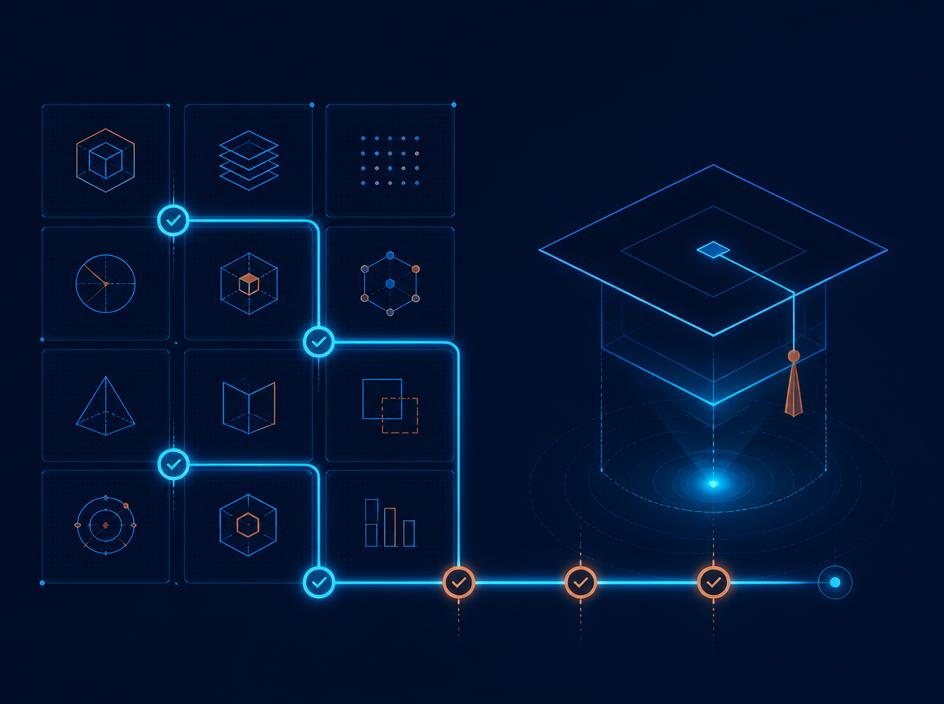
Every Turab Academy hardware course now starts in simulation. Before a participant wires a real sensor or commissions a real motor, they spend their first sessions inside a digital twin of the exact rig they will later touch — and they are encouraged to break it.
The reasoning is straightforward. Physical mistakes are expensive, slow, and sometimes dangerous; virtual mistakes are free, instant, and instructive. A participant who has shorted a virtual power rail a dozen times approaches the real one with a care that no safety lecture has ever produced.
The results have held up across three cohorts now: participants reach working hardware builds roughly a third faster, equipment damage has dropped to nearly zero, and — the outcome we did not predict — participants ask noticeably better questions, because they arrive at the real machine already knowing which parts they do not understand.
Simulation is not a replacement for hands-on work, and we never let it become one. But as a first step, it has quietly become the single most effective teaching decision we have made.
Written by
Dr. Nadia Rehman
Instructor, Digital Twin
Keep reading